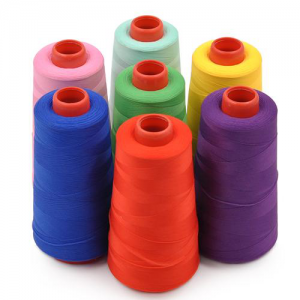
Spun-dyed fiber, creating natural and energetic color aesthetics, reproducing the wonderful colorful essence. The spun-dyeing technology gives polylactic acid fiber a splendor newborn. With the support of functionality and irregular section design, the polylactic acid fiber is soft and skin-friendly, biodegradable, anti-bacterial,anti-mold and flame-retardant, making the most cool green fashionable wearing experience within reach.
Spun-dyed polylactic acid fiber
Spun-dyed polylactic acid fiber
Recommendation Reasons
Based on renewable biomass raw materials, biodegradable bio-based fibers
are produced, which are green and environmentally-friendly; while the
spun-dyeing technology gives the fibers a rich variety of colors, endowing
them with full and bright color and luster.
Processing Technology
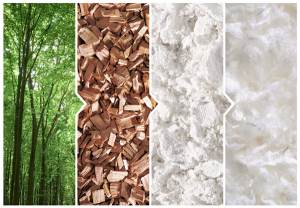
Glucose can be derived from starch (extracted from corn, cassava, sorghum
or other crops) or cellulose/hemi-cellulose (extracted from straw) by physical and chemical methods. Then glucose is fermented to produce lactic acid,which is then dehydrated to produce lactide.Then, polylactic acid is produced by ring-opening polymerization, and melt spinning process and spun-dyeing technology are used to produce spun-dyed polylactic acid fiber.
·The stock-dyeing technology reduces the secondary pollution of printing and dyeing process, and make the fabric be in full color, with the color fastness of Grade 4
·Good biocompatibility, and biodegradable
·anti-bacterial,anti-mite,ultraviolet-resistant,intrinsic flame retardant, burning without black smoke
Specifications
Breaking tenacity in dry state(cN/dtex)
Elongation at break (%)
Boiling water shrinkage rate (%)
Limiting oxygen index (%)
1.38dtexx38mm
3.5-5.5
25-60
4-6
25-27
Moisture regain (%)
Anti-mite performance (%)
Anti-bacterial rate
Color fastness(Grade)
0.6
≥99
Grade3A
4
The downstream application guidance
Spinning: Can be spun purely or blended with other fibers
Weaving: Yarns and filament yarns can be used for knitted and woven fabrics, with low temperature sizing
Dyeing and finishing: Disperse low-temperature dye is recommended, and the dyeing and heat-setting temperature is ≤ 115℃; the environmental pH value shall be controlled under 10; Low pressure steam ironing
Application field
Raw material proportioning
Main products and features
Beddings and home textiles
60% polylactic acid fiber, 40% Lyocell fiber
Used in four-piece home textile suits, beddings, etc.; anti-bacterial, anti-mite, low moisture regain rate, comfortable touching feeling
100% polylactic acid fiber
Used in quilts, pillow filling; soft, comfortable, anti-bacterial, anti-mite
Sports and leisure
80% polylactic acid fiber,20% viscose
Used for medium and high-end underwear, household clothing, baby clothes, etc.; wet permeable and breathable, anti-bacterial and anti-odor, soft and skin-caring
Business formal wear
65% polylactic acid fiber, 35% Modal
Used for high-end knitted and woven shirts, moisture permeable, soft and skin-friendly, anti-bacteria and anti-odor
Non-woven fabric
100% polylactic acid fiber
Used for face towel, facial cleansing tissue, etc.; anti-bacterial and anti-mite, biodegradable
Home textiles:Bedding,Curtain,Carpet,Filler,Towel,Toys
Industrial textiles:Sanitary textiles,Gauze mask
Q:What are the advantages of non-food bio-based new material polylactic
acid industry?
A:Polylactic acid can be produced from the non-food bio-based raw
materials, especially agricultural and forestry wastes such as straw, reeds and firewood. Sugar mixture and by-product fulvic acid are firstly produced through enzymolysis of these biomass. Fulvic acid is one of the high-efficient organic fertilizer, which can be used to improve the farmland; mixed sugar can be processed into lactic acid to produce lactide, and then be polymerized into polylactic acid. After the polylactic ac id is modified at industrial downstream, it can be used to produce food packaging material, fibers, engineering plastics, etc., covering all the same application filed as those of the petroleum-based plastics. Such a pathway achieve a successful conversion of straw to “plastic”. Sugar mixture can also be processed into bioethanol for bio-aviation fuel and other fields, replacing petroleum energy to a certain extent. On the one hand, the non-food bio-based polylactic acid industry achieves a completely harmless zero-carbon treatment of straw; on the other
hand, it also realizes the high-value use of agricultural and forestry waste,solving the problems of difficult straw recycling and low use value, etc.
YUAN Yuanyuan, WANG Jianzhao, SUN Huiyu ,ZHANG Xiangli,SUN Lixia(1. Technology Center of Shijiazhuang Customs District,Shijiazhuang Hebei,050051;2.PetroChina Hebei Marketing Company, Shijiazhuang Hebei,050051) Abstract: When conducting...
 DC New Material








HelloPlease log in