 DC New Material
Difficulties and Control Measures in Lyocell Fiber
461Lyocell fiber carding,carding process,fibrillation control,card clothing,high-yield carding, textile manufacturing solutions
View detailsSearch the whole station
Reasons for recommendation
The fibers absorb light energy to increase temperature and retain body
heat through far-infrared reflection.The addition of carbonyl active
components extracted from plants and silicon-boron nano compounds
endows the fibers with antibacterial properties. This new type of
fiber, which integrates cold resistance, heat collection, temperature
locking, and antibacterial functions, can meet consumers’demands for
efficient warmth retention and antibacterial properties in autumn and winter clothing.
Preparative technique
AIREPAI Fiber: The porous thermal-storage nanopowder, plant-extracted carbonyl active component, and polymer powder are blended proportionally to prepare light heat storage functional masterbatches, which are then mixed with polyester chips to prepare the fibers through melt spinning technique.
White-flame Fiber:Silicon-boron nanocompounds and nanoceramics are compounded to prepare functional masterbatches, which are then mixed with polyester chips to prepare the fibers through melt spinning technique.
Features of fibers and finished products
Main Specifications
AIREPAI Fiber
Staple:1.33dtexx38mm,
1.67dtexx38mm,2.22dtexx51mm,5.56dtexx51mm
Filament: 56dtex/48f, 84dtex/72f, 111dtex/96f, 167dtex/144f DTY
White-flame Fiber
Staple: 1.67dtexX38mm,3.3dtexx64mm
Filament: 56dtex/72f, 84dtex/72f, 111dtex/96f, 167dtex/144f DTY
Relative Standards
Polyester staple fiber (GB/T 14464-2017)
Polyester drawn textured yarn(GT/T14460-2015)
Properties of fibers and features of finished products
AIREPAI Fiber
·Light absorption, heat generation and storage, body far-infrared heat generation and storage.
·Plant-extracted active components bring lasting anti-bacterial effect to the fiber.
·The interior of the fiber presents a nano-layered pore structure, which is conducive to heat preservation, and the fiber is more than 12% lighter than that with the same material.
White-flame Fiber
·Light absorption, heat generation and storage, body far-infrared heat generation and storage.
·Silicon-boron compounds are added to provide long-lasting anti-bacterial effect to the fiber.
·No heavy metals, with safety performance satisfying the Class A standard for infants.
Performance indexes of the thermal-storage, heat-retaining and anti-bacteria polyester fiber
| AIREPAI Fiber Specifications | Breaking tenacity(cN/ dtex) | Elongation at break (%) | Moisture regain(%) | Dry thermal shrinkage (%) | Oil content (%) |
| 1.33dtexx38mm | 4.50 | 24.80 | 0.38 | 6.70 | 2.40 |
| Fabric testing (50%AIREPAI Fiber / 50% polyester fiber) | ||||||
| Light thermal storage performance (400±10)W/m2 | Far-infrared emissivity | Far-infrared radiation temperature rise value(℃) | Clo value (clo) | Heat transfer coefficient[W (m2·K)] | Thermal resistance[W (m²·K)] | Antibacterial rate (%) |
| Maximum temperature rise:8.7° C, average temperature rise:6.7°C | 0.89 | 3.80 | 0.486 | 13.30 | 0.075 | Staphylococcus:99 Escherichia coli: 88Candida albicans: 96 |
| White-flame Fiber Specification | Breaking tenacity (cN/ dtex) | Elongation at break (%) | Variable coefficient of break tenacity (%) | Coefficient of variation of elongation (%) | Curling shrinkage rate (%) | Boiling water shrinkage(%) | Oil content (%) |
| 84dtex/72f | 4.12 | 22.1 | 1.77 | 7.46 | 10.50 | 3.50 | 2.60 |
| Fabric (84% this fiber/16% elastane) | Wadding containing 20% of the fiber | (60% Lyocell/40% dacron) | |||
| Light-absorbing and heat-generating performance:temperature rise in 20 minutes (°C after being exposed to 500W spotlight for20 minutes) | Light-absorbing and heat-generating performance:temperature difference after 20minutes (C after being exposed to 500W spotlight for20 minutes) | Infrared transmittance(%) | Heat transfercoefficient [W (m2.K)] | Thermalresistance [W (m2·K)] | Antibacterial Rate (%) |
| 68.79 | 27.56 | 0.069 | 1.51 | 0.662 | Bacteriostasis rate: 99Escherichia coli: 99Candida albicans: 91 |
Examples of downstream applications of thermal-storage, heat-retaining and anti-bacteria polyester fiber
| Terminal field | Raw material ratio | Fiber specification | Properties of the product |
| Thermal underwear and inner wear (220g/m² knitted double-sided fabric) | 34.5% cotton/34.5% AIREPAI Fiber/25% acrylon/6% elastane | 1.33dtexx38mm | Lightweight yet quite thermal, with a warmth retention rate of 37.7% and a Clo value of 0.514 clo |
| Sports, leisure, outdoor, business exterior (315g/m2 fleece fabric) | 60% polyester fiber/ 40% AIREPAI Fiber | 82.5dtex/72f | Fluffy fabric and quite thermal, with a warmth retention rate of 52.7% and a Clo value of 0.791 clo |
| Cotton clothing, cotton quilts, and coldprotection equipment (200g/m? medium wadding) | 60% polyester fiber/40% AIREPAI Fiber | 1.67dtexx51mm | Fluffy and lightweight wadding, with a warmth retention rate of 83% and a Clo value of 5.41 clo,equivalent to duck’s down |
| Knitted fabric | 63% White-flameFiber/37% cotton | 167dtex/144f | Absorbing heat energy, comfortable and inclusive,soft and warm |
The downstream application guidance
Weaving: Staple fibers can be blended with wool, cashmere, acrylon, cellulose fibers, cotton and other materials to weave woven or knitted fabrics. They can also be mixed with various fibers to make fillers such as filling cotton, wadding, and non-woven fabrics. Filaments can be
directly used to produce knitted and woven fabrics, as well as in seamless woven products.
Dyeing and finishing: Low-temperature disperse dye is recommended, with the dyeing temperature≤ 120 ℃ , and the heat-setting temperature≤190℃.
Application of fibers
Clothing textiles:Scarf/Insulated coat/Thermalunderwear
Home textiles:Filler
Industrial textiles:Outdoor products
Q: What’s the thermal insulation principle and application of AIREPAI
Fiber?
A: The addition of carbonyl active components extracted from plants
enables the fiber to have efficient light absorption and heat generation, far-infrared radiation temperature rise, and antibacterial efficacy. The addition of porous thermal-storage nanopowder endows the fiber with rich nanometer microporous morphology, facilitating far-infrared radiation and heat retaining;the fiber possesses the light-thermal conversion ability in the whole band, the dual effect of thermal-storage and heat-retaining, as well as natural bacteriostatic properties. In extremely cold climates, it demonstrates significant cold resistance and heat preservation advantages and has currently been applied in some military supply fields.
Q: What are the roles of silicon-boron nanocompounds and nanoceramic
modified materials added to the White-flame Fiber?
A: The multi-layer structured silicon-boron nanocompounds designed through the development of materials that have strong visible and infrared light absorption capabilities, improving the light energy conversion rate of the material;nanoceramic modified materials are added to the fiber to make the fiber with a color close to white, which can keep the heat of the human body from being lost,automatically circulate the heat and reflect it to the most needed parts of the body, so that the body temperature can be maintained at the optimal balanced temperature, achieving a breakthrough in heating function.


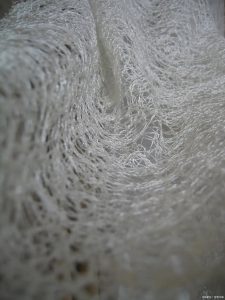
Lyocell fiber carding,carding process,fibrillation control,card clothing,high-yield carding, textile manufacturing solutions
View details
Flame-retardant and Anti-melt- drop Polyester Fiber
View details



HelloPlease log in